Posts

Showing posts with the label Fico Scope
Every Kentucky Loan Type. One Local Expert.
Whether you’re buying your first home, using down payment assistance, or rebuilding credit — there’s a program that fits. Compare them side by side before you commit.

🏠 FHA Loan

The go-to for first-time buyers and 580+ credit. Low down payment and flexible guidelines.

3.5% down · 580+ creditLearn More →

🎖 VA Loan

Zero down and no monthly mortgage insurance for veterans and active-duty service members.

$0 down · VA eligibleLearn More →

🌾 USDA Loan

100% financing for eligible rural and suburban Kentucky buyers within income limits.

$0 down · USDA areasLearn More →

🏛 KHC Assistance

Kentucky Housing down payment assistance for first-time and repeat buyers.

Up to $12,500 assistanceLearn More →

📈 Conventional

Best long-term value for stronger credit. PMI cancels at 20% equity, unlike FHA.

3% down · 620+ creditLearn More →

💰 Zero Down Options

Every route to buying with nothing down in Kentucky — VA, USDA, and KHC combos.

$0 down programsLearn More →

🌟 First-Time Buyers

All Kentucky first-time homebuyer programs compared in plain English.

Programs & grantsLearn More →

📊 Credit Scores

What score you actually need for each loan type in 2026 — and how to raise yours.

By loan programLearn More →

Kentucky Home Inspection vs. Appraisal: Key Differences

Image
By Joel Lobb, Mortgage Loan Officer · NMLS #57916 · Updated September 12, 2026 The difference between a Kentucky home inspection and a Kentucky appraisal is their purpose: an inspection evaluates the home's condition, while an appraisal estimates its market value for the mortgage process. One does not replace the other. A homebuyer's two questions: What needs attention, and what is the property worth? Buying in Louisville, Lexington, Bowling Green, or elsewhere in Kentucky? Before paying for inspections and appraisal services, understand who orders each report, what it covers, and how the results may affect your purchase. In this guide Comparison Inspection checklist Appraisal process Costs and timing Video FAQs Kentucky home inspection vs. appraisal: the difference HOME INSPECTION Condition What needs attention? Roof · Foundation · Plumbing Electrical · Heating and cooling Usually arranged by: the buyer Result: an inspection report Next step: review repairs and f...
Getting a Kentucky Mortgage in 3 Simple Steps
No confusing paperwork trails. No surprise fees. A clear path from first call to keys in hand.
01

💬 Get Pre-Qualified

Free application review with same-day answers. We look at your credit, income, and goals — no cost, no obligation, no pressure.

02

📋 Compare Your Options

FHA vs. Conventional vs. USDA vs. KHC — run side by side with your actual numbers so you see the real payment before you commit.

03

🏠 Close & Get Your Keys

Guided from contract to closing — appraisal, title, and underwriting coordinated so you always know what happens next.

Watch: Kentucky Mortgage Guides
Straight answers from my YouTube channel — no jargon, no sales pitch.
▶ More videos on my YouTube channel →
Joel Lobb and family - Kentucky mortgage loan officer
Kentucky Local. Not a Call Center.

Hi, I’m Joel Lobb — a Kentucky dad who’s spent 20+ years helping families across all 120 counties buy their first home. When you call, you get me — not a phone tree. Questions on a Saturday morning? I answer.

1,300+ Kentucky families have trusted me with their mortgage — from Louisville to Lexington to the smallest towns in the state. Free application reviews, same-day pre-approvals, and honest answers about what you actually qualify for.

See What You Qualify For →

Credit Karma DOES NOT give you FICO scores! Which is what mortgage lenders use.

Credit Karma vs FICO Score: What Kentucky Homebuyers Must Know (2026) Home › Blog › Credit & Buying Tips › Credit Karma vs FICO Score Credit & Home Buying Tips Credit Karma vs FICO Score: What Every Kentucky Homebuyer Must Know (2026) Credit Karma is convenient — but the score it shows you is not what mortgage lenders use. Millions of Kentucky homebuyers have been misled by this gap. Here's the truth about your mortgage credit score before you apply. ✍️ Joel Lobb , Mortgage Broker FHA, VA, KHC, USDA 📍 Louisville, Kentucky 🏦 NMLS #57916 | Company NMLS #1738461 Updated March 11, 2026 📋 In This Article Credit Karma Uses VantageScore — Lenders Use FICO FICO Score Range & Kentucky Loan Minimums Which FICO Score Do Mortgage Lenders Actually Use? How the Mid...

What credit score do mortgage lenders use?

Image
Which FICO Score Generation Do Mortgage Lenders Use? The best-known credit scores are going to fall under either the  FICO or VantageScore brands. There are multiple generations of each score brand, as every few years, the score developers create newer versions. So, for example, there’s a VantageScore 1.0, 2.0, 3.0, and 4.0. In most lending environments outside of mortgages, it’s hard to know which specific credit score a lender will use to evaluate your application. And, even if you knew your lender used a FICO Score or a VantageScore credit score, you still would not know which generation of the score it is using. For example, you may apply for an auto loan with one lender that checks your FICO Auto Score 8 based on your Experian credit report. Yet, if you apply for financing with a different auto lender, it may opt to check your VantageScore 3.0 score based on TransUnion data. The only way to know for sure is to ask the lender which credit report and which credit score version ...

What is a good FICO Score for Mortgage Loan Approval?

Image
 W hat is a good FICO Score for Mortgage Loan Approval? FICO Scores generally range from 300 to 850, where higher scores demonstrate lower credit risk and lower scores demonstrate higher credit risk (note: some types of FICO® Scores have a slightly broader range).  What’s considered a “good” FICO® Score varies, since each lender has its own standards for approving credit applications, based on the level of risk it finds acceptable. So one lender may offer its lowest interest rates to people with FICO® Scores above 730, while another may only offer it to people with FICO® Scores above 760. The chart below provides a breakdown of ranges for FICO® Scores found across the U.S. consumer population. Again, each lender has its own credit risk standards, but this chart can serve as a general guide of what a FICO® Score represents.

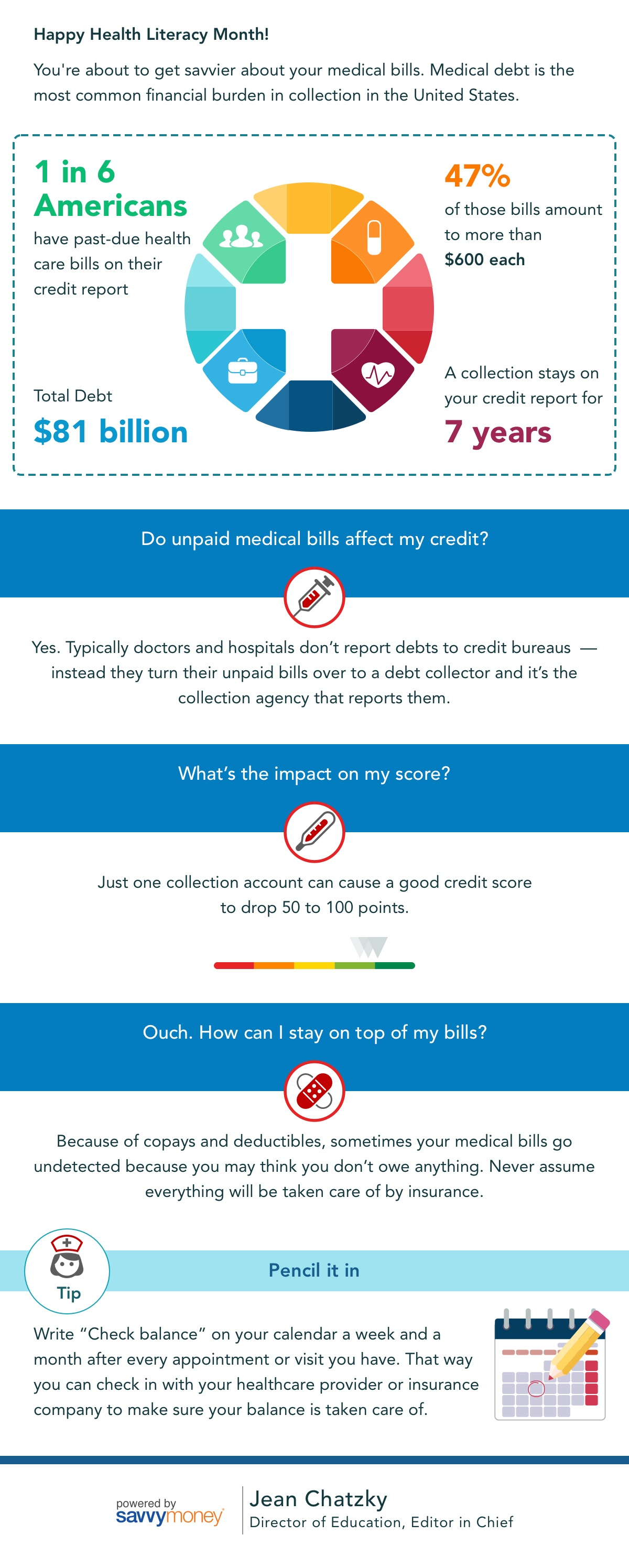
Equifax, Experian and TransUnion will also no longer include medical collection debt under at least $500 on credit reports

Image
  Consumer Reporting Agencies to Remove Most Medical Debt From Credit Reports The three nationwide credit reporting agencies, Equifax, Experian and TransUnion, announced that effective July 1, 2022, they will no longer include medical debt that was paid after it was sent to collections on consumer credit reports. The companies’ CEOs provided a joint statement on the decision to change their approach to medical collection debt reporting: “Medical collection debt often arises from unforeseen medical circumstances. These changes are another step we’re taking together to help people across the United States focus on their financial and personal wellbeing,” said Mark W. Begor, CEO Equifax; Brian Cassin, CEO Experian; and Chris Cartwright, CEO TransUnion. “As an industry we remain committed to helping drive fair and affordable access to credit for all consumers.” The time period before unpaid medical collection debt would appear on a consumer’s report will be inc...

Effective on 9/18/21, Fannie Mae announced that their Automated Underwriting System will now take an AVERAGE of the two scores for qualifying

Image
  Fannie Mae announced that their Automated Underwriting System will now take an AVERAGE of the two scores for qualifying Do you and your partner have very different credit scores? Great news! You may have access to more loan program options than you thought! Here's the deal... All lenders pull FICO scores from each of the three credit bureaus to qualify a borrower. In situations with co-applicants, we will use the lower of the two middle scores for qualifying purposes. Historically, to do a Conventional Loan, both mid-scores would have to be above 620. Effective on 9/18/21, Fannie Mae announced that their Automated Underwriting System will now take an AVERAGE of the two scores for qualifying. This critical change may help many borrowers qualify and have increased advantages when putting an offer in on a home. Long story short - we can help you now more than ever. Curious if this will help you? Reach out to me today, and we can investigate. PS: These changes are effective Sep...