KHC is increasing the down payment assistance program amount from $6,000 to $7,500. This is for both Regular
Down Payment and for Affordable Down Payment assistance programs

I specialize in Kentucky First Time Homebuyers FHA, VA, USDA & Rural Housing, KHC and Fannie Mae mortgage loans. I have helped over 1300 Kentucky families buy their first home or refinance their current mortgage for a lower payment; Kentucky First time buyers we still how available down payment assistance with KHC. Free Mortgage applications/ same day approvals. Web site is not endorsed by the FHA, VA, USDA govt agency. Text/call 502-905-3708 kentuckyloan@gmail.com NMLS 57916 NMLS 1738461

 Why Work With Me?
Local Expertise: I know the ins and outs of Kentucky’s housing market and loan programs.
Fast Approvals: I offer free mortgage applications with same-day approvals to keep the process moving quickly.
Customized Loan Solutions: Whether you’re buying a home or refinancing, I’ll find the right loan program to fit your needs.
Personalized Service: I treat every client like family, ensuring you’re supported and informed throughout the process.
About My Website
Visit my website for a wealth of resources tailored to Kentucky homebuyers. You’ll find:
Step-by-step guides for first-time homebuyers.
Information on loan programs like FHA, VA, USDA, and KHC.
Tools to help you calculate potential payments and affordability.
Blog posts with tips and updates on the Kentucky housing market.
A secure portal to start your loan application and upload documents.
Please Note: My website is not endorsed by the FHA, VA, USDA, or any government agency. It is an independent platform created to educate and assist homebuyers with expert advice and accessible tools.
Why Work With Me?
Local Expertise: I know the ins and outs of Kentucky’s housing market and loan programs.
Fast Approvals: I offer free mortgage applications with same-day approvals to keep the process moving quickly.
Customized Loan Solutions: Whether you’re buying a home or refinancing, I’ll find the right loan program to fit your needs.
Personalized Service: I treat every client like family, ensuring you’re supported and informed throughout the process.
About My Website
Visit my website for a wealth of resources tailored to Kentucky homebuyers. You’ll find:
Step-by-step guides for first-time homebuyers.
Information on loan programs like FHA, VA, USDA, and KHC.
Tools to help you calculate potential payments and affordability.
Blog posts with tips and updates on the Kentucky housing market.
A secure portal to start your loan application and upload documents.
Please Note: My website is not endorsed by the FHA, VA, USDA, or any government agency. It is an independent platform created to educate and assist homebuyers with expert advice and accessible tools.
Why Work With Me?
Local Expertise: I know the ins and outs of Kentucky’s housing market and loan programs.
Fast Approvals: I offer free mortgage applications with same-day approvals to keep the process moving quickly.
Customized Loan Solutions: Whether you’re buying a home or refinancing, I’ll find the right loan program to fit your needs.
Personalized Service: I treat every client like family, ensuring you’re supported and informed throughout the process.
About My Website
Visit my website for a wealth of resources tailored to Kentucky homebuyers. You’ll find:
Step-by-step guides for first-time homebuyers.
Information on loan programs like FHA, VA, USDA, and KHC.
Tools to help you calculate potential payments and affordability.
Blog posts with tips and updates on the Kentucky housing market.
A secure portal to start your loan application and upload documents.
Please Note: My website is not endorsed by the FHA, VA, USDA, or any government agency. It is an independent platform created to educate and assist homebuyers with expert advice and accessible tools.
Why Work With Me?
Local Expertise: I know the ins and outs of Kentucky’s housing market and loan programs.
Fast Approvals: I offer free mortgage applications with same-day approvals to keep the process moving quickly.
Customized Loan Solutions: Whether you’re buying a home or refinancing, I’ll find the right loan program to fit your needs.
Personalized Service: I treat every client like family, ensuring you’re supported and informed throughout the process.
About My Website
Visit my website for a wealth of resources tailored to Kentucky homebuyers. You’ll find:
Step-by-step guides for first-time homebuyers.
Information on loan programs like FHA, VA, USDA, and KHC.
Tools to help you calculate potential payments and affordability.
Blog posts with tips and updates on the Kentucky housing market.
A secure portal to start your loan application and upload documents.
Please Note: My website is not endorsed by the FHA, VA, USDA, or any government agency. It is an independent platform created to educate and assist homebuyers with expert advice and accessible tools.
 Why Work With Me?
Local Expertise: I know the ins and outs of Kentucky’s housing market and loan programs.
Fast Approvals: I offer free mortgage applications with same-day approvals to keep the process moving quickly.
Customized Loan Solutions: Whether you’re buying a home or refinancing, I’ll find the right loan program to fit your needs.
Personalized Service: I treat every client like family, ensuring you’re supported and informed throughout the process.
About My Website
Visit my website for a wealth of resources tailored to Kentucky homebuyers. You’ll find:
Step-by-step guides for first-time homebuyers.
Information on loan programs like FHA, VA, USDA, and KHC.
Tools to help you calculate potential payments and affordability.
Blog posts with tips and updates on the Kentucky housing market.
A secure portal to start your loan application and upload documents.
Please Note: My website is not endorsed by the FHA, VA, USDA, or any government agency. It is an independent platform created to educate and assist homebuyers with expert advice and accessible tools.
Why Work With Me?
Local Expertise: I know the ins and outs of Kentucky’s housing market and loan programs.
Fast Approvals: I offer free mortgage applications with same-day approvals to keep the process moving quickly.
Customized Loan Solutions: Whether you’re buying a home or refinancing, I’ll find the right loan program to fit your needs.
Personalized Service: I treat every client like family, ensuring you’re supported and informed throughout the process.
About My Website
Visit my website for a wealth of resources tailored to Kentucky homebuyers. You’ll find:
Step-by-step guides for first-time homebuyers.
Information on loan programs like FHA, VA, USDA, and KHC.
Tools to help you calculate potential payments and affordability.
Blog posts with tips and updates on the Kentucky housing market.
A secure portal to start your loan application and upload documents.
Please Note: My website is not endorsed by the FHA, VA, USDA, or any government agency. It is an independent platform created to educate and assist homebuyers with expert advice and accessible tools.
Some government-backed loans are accessible with a score no minimum score or 500 to 580, while conventional loans require a minimum credit score of 620.
Thanks to today’s availability of different loan types, you no longer need to build that infamous 20% down payment, and you can access a loan with a 0-3% down.
The debt-to-income (DTI) ratio measures how much of your income is used to repay outstanding debt.
Why Work With Me?
Local Expertise: I know the ins and outs of Kentucky’s housing market and loan programs.
Fast Approvals: I offer free mortgage applications with same-day approvals to keep the process moving quickly.
Customized Loan Solutions: Whether you’re buying a home or refinancing, I’ll find the right loan program to fit your needs.
Personalized Service: I treat every client like family, ensuring you’re supported and informed throughout the process.
About My Website
Visit my website for a wealth of resources tailored to Kentucky homebuyers. You’ll find:
Step-by-step guides for first-time homebuyers.
Information on loan programs like FHA, VA, USDA, and KHC.
Tools to help you calculate potential payments and affordability.
Blog posts with tips and updates on the Kentucky housing market.
A secure portal to start your loan application and upload documents.
Please Note: My website is not endorsed by the FHA, VA, USDA, or any government agency. It is an independent platform created to educate and assist homebuyers with expert advice and accessible tools.
Why Work With Me?
Local Expertise: I know the ins and outs of Kentucky’s housing market and loan programs.
Fast Approvals: I offer free mortgage applications with same-day approvals to keep the process moving quickly.
Customized Loan Solutions: Whether you’re buying a home or refinancing, I’ll find the right loan program to fit your needs.
Personalized Service: I treat every client like family, ensuring you’re supported and informed throughout the process.
About My Website
Visit my website for a wealth of resources tailored to Kentucky homebuyers. You’ll find:
Step-by-step guides for first-time homebuyers.
Information on loan programs like FHA, VA, USDA, and KHC.
Tools to help you calculate potential payments and affordability.
Blog posts with tips and updates on the Kentucky housing market.
A secure portal to start your loan application and upload documents.
Please Note: My website is not endorsed by the FHA, VA, USDA, or any government agency. It is an independent platform created to educate and assist homebuyers with expert advice and accessible tools.
 Why Work With Me?
Local Expertise: I know the ins and outs of Kentucky’s housing market and loan programs.
Fast Approvals: I offer free mortgage applications with same-day approvals to keep the process moving quickly.
Customized Loan Solutions: Whether you’re buying a home or refinancing, I’ll find the right loan program to fit your needs.
Personalized Service: I treat every client like family, ensuring you’re supported and informed throughout the process.
About My Website
Visit my website for a wealth of resources tailored to Kentucky homebuyers. You’ll find:
Step-by-step guides for first-time homebuyers.
Information on loan programs like FHA, VA, USDA, and KHC.
Tools to help you calculate potential payments and affordability.
Blog posts with tips and updates on the Kentucky housing market.
A secure portal to start your loan application and upload documents.
Please Note: My website is not endorsed by the FHA, VA, USDA, or any government agency. It is an independent platform created to educate and assist homebuyers with expert advice and accessible tools.
Why Work With Me?
Local Expertise: I know the ins and outs of Kentucky’s housing market and loan programs.
Fast Approvals: I offer free mortgage applications with same-day approvals to keep the process moving quickly.
Customized Loan Solutions: Whether you’re buying a home or refinancing, I’ll find the right loan program to fit your needs.
Personalized Service: I treat every client like family, ensuring you’re supported and informed throughout the process.
About My Website
Visit my website for a wealth of resources tailored to Kentucky homebuyers. You’ll find:
Step-by-step guides for first-time homebuyers.
Information on loan programs like FHA, VA, USDA, and KHC.
Tools to help you calculate potential payments and affordability.
Blog posts with tips and updates on the Kentucky housing market.
A secure portal to start your loan application and upload documents.
Please Note: My website is not endorsed by the FHA, VA, USDA, or any government agency. It is an independent platform created to educate and assist homebuyers with expert advice and accessible tools.
Why Work With Me?
Local Expertise: I know the ins and outs of Kentucky’s housing market and loan programs.
Fast Approvals: I offer free mortgage applications with same-day approvals to keep the process moving quickly.
Customized Loan Solutions: Whether you’re buying a home or refinancing, I’ll find the right loan program to fit your needs.
Personalized Service: I treat every client like family, ensuring you’re supported and informed throughout the process.
About My Website
Visit my website for a wealth of resources tailored to Kentucky homebuyers. You’ll find:
Step-by-step guides for first-time homebuyers.
Information on loan programs like FHA, VA, USDA, and KHC.
Tools to help you calculate potential payments and affordability.
Blog posts with tips and updates on the Kentucky housing market.
A secure portal to start your loan application and upload documents.
Please Note: My website is not endorsed by the FHA, VA, USDA, or any government agency. It is an independent platform created to educate and assist homebuyers with expert advice and accessible tools.
Why Work With Me?
Local Expertise: I know the ins and outs of Kentucky’s housing market and loan programs.
Fast Approvals: I offer free mortgage applications with same-day approvals to keep the process moving quickly.
Customized Loan Solutions: Whether you’re buying a home or refinancing, I’ll find the right loan program to fit your needs.
Personalized Service: I treat every client like family, ensuring you’re supported and informed throughout the process.
About My Website
Visit my website for a wealth of resources tailored to Kentucky homebuyers. You’ll find:
Step-by-step guides for first-time homebuyers.
Information on loan programs like FHA, VA, USDA, and KHC.
Tools to help you calculate potential payments and affordability.
Blog posts with tips and updates on the Kentucky housing market.
A secure portal to start your loan application and upload documents.
Please Note: My website is not endorsed by the FHA, VA, USDA, or any government agency. It is an independent platform created to educate and assist homebuyers with expert advice and accessible tools.
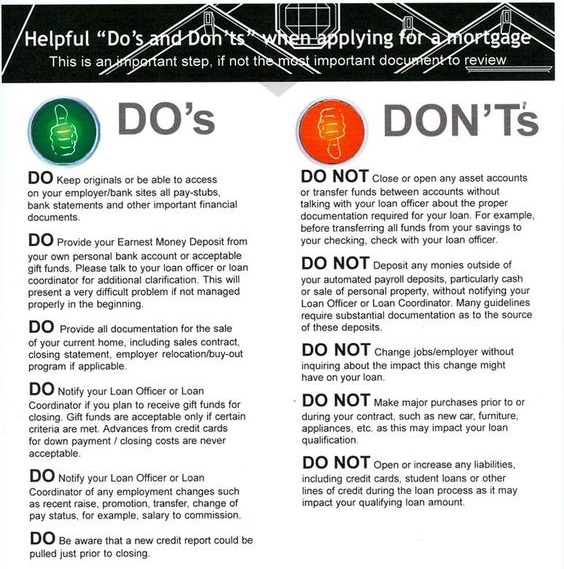
DO maintain up-to-date records The mortgage application process is paperwork-heavy, and lenders could ask you to pull up records at a moment’s notice. To make things easier for yourself, make sure you have the following records readily available:
DO keep your credit score in mint condition. Continue to make payments on time. The lender might pull your credit report again, and any negative change to your score could jeopardize your approval.
DO understand that things change. The requirements to receive approval for a home loan are always changing, and underwriters require more documentation now than they have in the past. Even if requests seem silly, intrusive or unnecessary, keep in mind that if they didn’t need it, they wouldn’t ask for it.
DON’T apply for new credit. Changes in credit can cause delays, change the terms of your financing or even prevent you from closing on a home. If you must open a new account (or even borrow against retirement funds), be sure to consult your loan officer first.
DON’T change jobs midway through the process. Probationary periods and career or status changes — such as from a salaried to a commission-based position, leave of absence or new bonus structure — can be subject to strict rules.
DON’T make undocumented deposits. Large (and sometimes even small) deposits must be sourced unless they’re identified. Make copies of all checks and deposit slips, keep your deposits separate and small, and avoid depositing cash.
DON’T wait to liquidate funds from stock or retirement accounts. If you need to sell investments, do it now and document the transaction. Don’t take the risk of the market working against you, leaving you short on funds for closing.
 .
Why Work With Me?
Local Expertise: I know the ins and outs of Kentucky’s housing market and loan programs.
Fast Approvals: I offer free mortgage applications with same-day approvals to keep the process moving quickly.
Customized Loan Solutions: Whether you’re buying a home or refinancing, I’ll find the right loan program to fit your needs.
Personalized Service: I treat every client like family, ensuring you’re supported and informed throughout the process.
About My Website
Visit my website for a wealth of resources tailored to Kentucky homebuyers. You’ll find:
Step-by-step guides for first-time homebuyers.
Information on loan programs like FHA, VA, USDA, and KHC.
Tools to help you calculate potential payments and affordability.
Blog posts with tips and updates on the Kentucky housing market.
A secure portal to start your loan application and upload documents.
Please Note: My website is not endorsed by the FHA, VA, USDA, or any government agency. It is an independent platform created to educate and assist homebuyers with expert advice and accessible tools.
.
Why Work With Me?
Local Expertise: I know the ins and outs of Kentucky’s housing market and loan programs.
Fast Approvals: I offer free mortgage applications with same-day approvals to keep the process moving quickly.
Customized Loan Solutions: Whether you’re buying a home or refinancing, I’ll find the right loan program to fit your needs.
Personalized Service: I treat every client like family, ensuring you’re supported and informed throughout the process.
About My Website
Visit my website for a wealth of resources tailored to Kentucky homebuyers. You’ll find:
Step-by-step guides for first-time homebuyers.
Information on loan programs like FHA, VA, USDA, and KHC.
Tools to help you calculate potential payments and affordability.
Blog posts with tips and updates on the Kentucky housing market.
A secure portal to start your loan application and upload documents.
Please Note: My website is not endorsed by the FHA, VA, USDA, or any government agency. It is an independent platform created to educate and assist homebuyers with expert advice and accessible tools.