What are the residual income requirements for a Kentucky VA Home Loan Approval?


Residual Income for a Kentucky VA Loan Approval
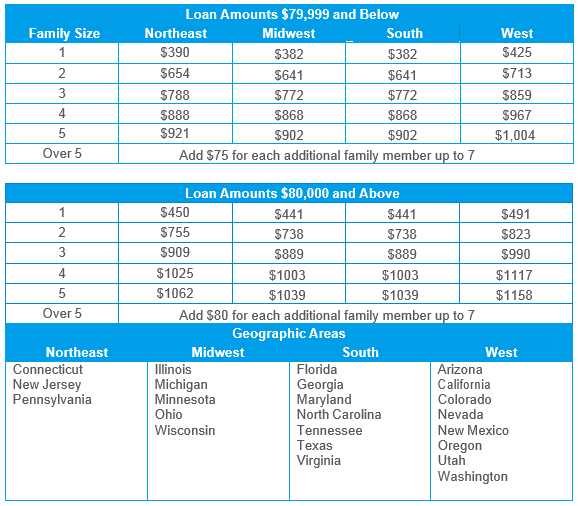
Residual income is the amount of income remaining after housing expenses, income taxes, long-term obligations and other expenses have been deducted from the borrower’s total gross pay. VA requires a specific amount of monthly residual income be available for the borrower’s use. This amount is based on the family size, location of the property and loan amount.
  • Federal, state and local taxes must be entered in DU or LP. Taxes should be calculated using the most recently published tax charts by the IRS and state or local taxing authorities. Click here for Tax tables.
  • Maintenance and utility costs may be estimated at 14 cents per square foot.
Minimum Residual Income with DTI <=41% 

residual income requirements for a Kentucky VA Home Loan Approval


Mortgage Application Checklist of Documents Needed below  πŸ‘‡

W-2 forms (previous 2 years)
Paycheck stubs (last 30 days - most current)
Employer name and address (2 year history including any gaps)
Bank accounts statement (recent 2 months – all pages
Statements for 401(k)s, stocks and other investments (most recent)
federal tax returns (previous 2 years)
Residency history (2 year history)
Photo identification for applicant and co-applicant (valid Driver’s License



click on link for mortgage pre-approval


Joel Lobb (NMLS#57916)


Senior Loan Officer

American Mortgage Solutions, Inc.
10602 Timberwood Circle Suite 3
Louisville, KY 40223


Company ID #1364 | MB73346

Text/call 502-905-3708


kentuckyloan@gmail.com


If you are an individual with disabilities who needs accommodation, or you are having difficulty using our website to apply for a loan, please contact us at 502-905-3708.


Disclaimer: No statement on this site is a commitment to make a loan. Loans are subject to borrower qualifications, including income, property evaluation, sufficient equity in the home to meet Loan-to-Value requirements, and final credit approval. Approvals are subject to underwriting guidelines, interest rates, and program guidelines and are subject to change without notice based on applicant's eligibility and market conditions. Refinancing an existing loan may result in total finance charges being higher over the life of a loan. Reduction in payments may reflect a longer loan term. Terms of any loan may be subject to payment of points and fees by the applicant Equal Opportunity Lender. NMLS#57916http://www.nmlsconsumeraccess.org/


NMLS Consumer Access for Joel Lobb 

Accessibility for Website 

Privacy Policy

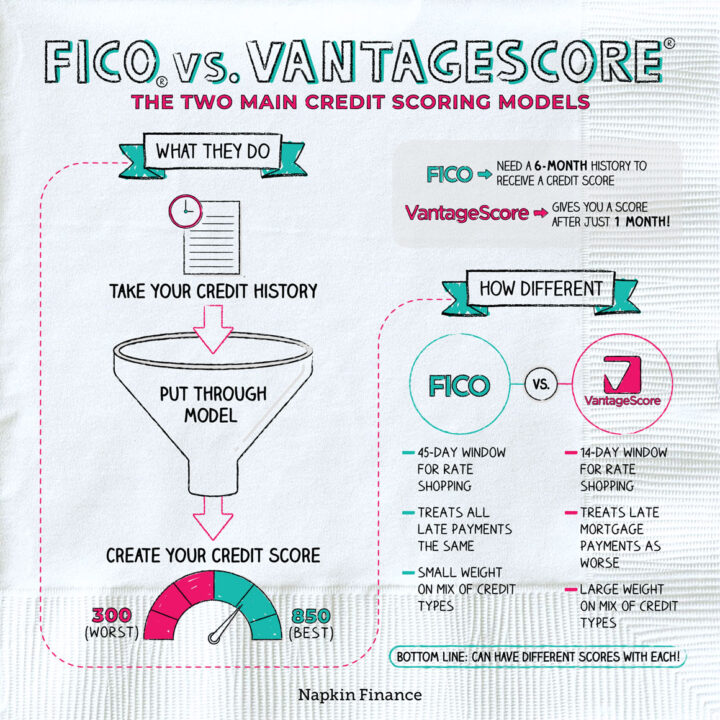
Credit Karma DOES NOT give you FICO scores! Which is what mortgage lenders use.

Great information to share with your clients that uses Credit Karma. A lot of people do not know that the Credit Karma app is a Vantage Score.

Credit Karma is NOT Free!
Credit Karma makes money off of the personal information you volunteered!
Credit Karma is NOT a credit monitoring site! - They collect your information from the credit agencies to create targeted campaigns based on your personal information which makes Credit Karma an affiliate marketing site!
Credit Karma DOES NOT give you FICO scores! Which is what mortgage lenders use.
Credit Karma provides you with Vantage scores (Not heavily used by lenders)
Credit Karma buys your information for pennies on the dollar, this is how they are able to provide you with updates every 7 days.
Why?... To get you to look at your scores and their AFFILIATE offers! You know, the offers for those credit cards that say you have a fair, good or very good chance of being approved for....
Have you noticed they never say, "You have a bad or poor chance”?
Apply, get denied and now you have an inquiry on your credit profile.
For those of you that are seeing you have a "chance" of getting approved for an American Express πŸ’³ think again... You would be surprised to know, American Express only pulls from Experian for credit cards?
Credit Karma DOES NOT give you Experian credit report or scores

While it’s common knowledge that mortgage lenders use FICO scores, most people with a credit history have three FICO scores, one from each of the three national credit bureaus (Experian, Equifax, and TransUnion). 


Credit Karma DOES NOT give you FICO scores! Which is what mortgage lenders use. Which FICO Score is Used for Mortgages?


  • Which FICO Score is Used for Mortgages?

Most lenders determine a borrower’s creditworthiness based on FICO® scores, a Credit Score developed by Fair Isaac Corporation (FICO™). This score tells the lender what type of credit risk you are and what your interest rate should be to reflect that risk. FICO scores have different names at each of the three major United States credit reporting companies. And there are different versions of the FICO formula. Here are the specific versions of the FICO formula used by mortgage lenders:

  • Equifax Beacon 5.0
  • Experian/Fair Isaac Risk Model v2
  • TransUnion FICO Risk Score 04

Lenders have identified a strong correlation between Mortgage performance and FICO Bureau scores (FICO score). FICO scores range from 300 to 850. The lower the FICO score, the greater the risk of default.

Which Score Gets Used?

Since most people have three FICO scores, one from each credit bureau, how do lenders choose which one to use?

For a FICO score to be considered “usable”, it must be based on adequate, concrete information. If there is too little information, or if the information is inaccurate, the FICO score may be deemed unusable for the mortgage underwriting process. Once the underwriter has determined if a score is usable or not, here’s how they decide which score(s) to use for an individual borrower:

  • If all three scores are different, they use the middle score
  • If two of the scores are the same, they use that score, regardless of whether the two repeated scores are higher or lower than the third score

Lenders have identified a strong correlation between Mortgage performance and FICO Bureau scores (FICO score). FICO scores range from 300 to 850. The lower the FICO score, the greater the risk of default.

If it helps to visualize this information:

Identifying the Underwriting Score
ExampleScore 1Score 2Score 3Underwriting Score
Borrower 1680700720700
     

Joel Lobb

Mortgage Loan Officer

Individual NMLS ID #57916


American Mortgage Solutions, Inc.

10602 Timberwood Circle 

Louisville, KY 40223

Company NMLS ID #1364

click here for directions to our office


Text/call:      502-905-3708

fax:            502-327-9119
email:
          kentuckyloan@gmail.com


https://www.mylouisvillekentuckymortgage.com/


Joel Lobb
Senior  Loan Officer
(NMLS#57916)
 
 Company ID #1364 | MB73346
 

text or call my phone: (502) 905-3708
email me at kentuckyloan@gmail.com

The view and opinions stated on this website belong solely to the authors, and are intended for informational purposes only. The posted information does not guarantee approval, nor does it comprise full underwriting guidelines. This does not represent being part of a government agency. The views expressed on this post are mine and do not necessarily reflect the view of my employer. Not all products or services mentioned on this site may fit all people. NMLS ID# 57916, (www.nmlsconsumeraccess.org). USDA Mortgage loans only offered in Kentucky.

All loans and lines are subject to credit approval, verification, and collateral evaluation

Kentucky Mortgage Guidelines for VA, FHA, USDA and Conventional Mortgage Loans

Kentucky Mortgage Guidelines for VA, FHA, USDA and Conventional Mortgage Loans


Kentucky VA Mortgage Loans


   • VA IRRRLS NO FICO 

   • Minimum FICO 550 on full files OR true NO FICO

   • Manual underwrite to a 580 FICO

   • Cash out to 100% LTV

   • Manufactured homes allowed, double wide or bigger

   • VA IRRRL NO LTV cap

   • VA IRRRL, unlimited late payments (loan must be current and last 6 payments on time)

   • VA IRRRL, allow odd terms on fixed loans

   • VA purchase up to 100% LTV

   • VA escrow holdbacks allowed


Kentucky FHA Mortgage Loans


   • FHA streamlines NO FICO

   • Minimum FICO 550 on full files 

   • Manufactured homes allowed, double wide or bigger

   • FHA streamlines, NOO allowed. NO Appraisals or AVMs

   • FHA 203(k) & (h) allowed

   • FHA escrow holdbacks allowed


Kentucky USDA Mortgage Loans


   • USDA Streamlines NO FICO

   • Minimum FICO 580 on full files OR true NO FICO

   • Manufactured homes allowed, double wide or bigger

   •  Streamlined assist 

   •  USDA escrow holdbacks allowed


Kentucky Conventional Mortgage Loans


   • Minimum FICO 580

   • Manufactured homes allowed, double wide or bigger

   • Up to 97% LTV (allow for the 3% to be gifted)

   • LPMI up to 97% LTV

   • LPMI and Regular MI allowed on investment properties

   • Unlimited financed properties (follow Fannie Mae guidelines)

   • HARP DU Refi Plus (allow for MI to be transferred) Fannie

   • HARP Open Access Relief loan (allow for MI to be transferred) Freddie

   • Home One, HomeReady, Home Possible

   • 80/10/10 Program with HELOC 2nd


I hope this gives you some useful input to help guide your decision making. Give me a call if you have more specific questions! Thanks so much 

Joel Lobb (NMLS#57916)
Senior  Loan Officer
 
American Mortgage Solutions, Inc.
10602 Timberwood Circle Suite 3
Louisville, KY 40223
Company ID #1364 | MB73346
 

Text/call 502-905-3708

If you are an individual with disabilities who needs accommodation, or you are having difficulty using our website to apply for a loan, please contact us at 502-905-3708.
Disclaimer: No statement on this site is a commitment to make a loan. Loans are subject to borrower qualifications, including income, property evaluation, sufficient equity in the home to meet Loan-to-Value requirements, and final credit approval. Approvals are subject to underwriting guidelines, interest rates, and program guidelines and are subject to change without notice based on applicant's eligibility and market conditions. Refinancing an existing loan may result in total finance charges being higher over the life of a loan. Reduction in payments may reflect a longer loan term. Terms of any loan may be subject to payment of points and fees by the applicant  Equal Opportunity Lender. NMLS#57916http://www.nmlsconsumeraccess.org/


Kentucky First Time Home Buyer Programs For Home Mortgage Loans: Kentucky First-Time Home Buyer Programs of 2022

Kentucky First Time Home Buyer Programs For Home Mortgage Loans: Kentucky First-Time Home Buyer Programs of 2022: Kentucky First-Time Home Buyer Programs  There are basically 4 mortgage programs for first time home buyers in Kentucky to consider: 1....

100% Financing Zero Down Payment Kentucky Mortgage Home Loans for Kentucky First time Home Buyers: Credit Scores Required for Kentucky Mortgage Loan ...

100% Financing Zero Down Payment Kentucky Mortgage Home Loans for Kentucky First time Home Buyers: Credit Scores Required for Kentucky Mortgage Loan ...:

Gift Funds & Gift of Equity for Kentucky FHA Mortgage Loan Approval Requirements

 Kentucky FHA Gift of Equity and Gift Funds for Down Payment Requirements

Kentucky FHA Gift of Equity and Gift Funds for Down Payment Requirements


Gifts may be provided by:

•  Borrower's family member*;
•  the borrower's employer or labor union;
•  a close friend with a clearly defined and documented interest in the borrower;
•  a charitable organization;
•  a governmental agency or public entity that has a program providing homeownership assistance to:
•      low or moderate income families; or
•      first-time homebuyers.

*Family member defined as:
•  child, foster child, parent, or grandparent; spouse or domestic partner;
•  legally adopted son or daughter, including a child who is placed with the borrower by an
authorized agency for legal adoption;
•  brother, stepbrother, sister, stepsister;
•  uncle or aunt
•  son-in-law, daughter-in­ law, father-in-law, mother­ in-law, brother-in-law, or sister-in-law of
the borrower.

Guidelines -  Personal Gift Funds

•      Primary residence 1-4 unit only
•     Funds may not be used to fulfill mandatory reserve requirements for manually underwritten
files.
•      No borrower funds are required for down payment.
•      Cash on hand is not an acceptable source of donor funds.


Documentation  - Personal Gift Funds

•      Gift letter - See Requirements in "Notable Agency Differences" Above
•      If the gift funds have been verified in the borrower's account, obtain the donor's bank
statement showing the withdrawal and evidence of the deposit into the borrower's account.
•      If the gift funds are not verified in the borrower's account, obtain the certified check or
money order or cashier's check or wire transfer or other official check, and a bank statement
showing the withdrawal from the donor's account.
•      If the gift funds are paid directly to the settlement agent, verify that the settlement
agent received the funds from the donor for the amount of the gift, and that the funds were from an
acceptable source.
•      If the gift funds are being borrowed by the donor and documentation  from the bank or other
savings account is not available, have the donor provide written evidence that the funds were
borrowed from an acceptable source, not from a party to the transaction.
Regardless  of when gift funds are made available to a borrower, the lender must be able to make a
reasonable determination that the gift funds were not provided by an unacceptable source.  This
usually requires a copy of the donor's bank statement.

Guidelines -  Gift of Equity

•     Family member is ONLY eligible donor for gifts of equity
•      Limited to 85% LTV unless:
o      residence is currently selling-family member's primary residence or
purchasing family member has been renting residence 6 months prior to sales contract date.


Documentation -  Gift of Equity

Gift Letter -  See Requirements in "Notable Agency Differences" Above

Mortgage Overlays Explained

Overlays Explained


Kentucky Mortgage Overlays


What’s an Overlay? An Overlay is a mortgage industry term that highlights an additional qualifying requirement(s) beyond what the guidelines issued by Fannie Mae and Freddie Mac. FHA, VA and USDA loans can also have overlays. These guidelines are set forth for several reasons, but one is to provide lenders with mortgage program stability as well as allowing lenders to sell loans, either individually or ‘in bulk.

Think about that for a moment. If there were no secondary market at some point the mortgage company would run out of money to lend. When a lender makes a loan, it draws down some money from its credit line and replenishes that credit line once the loan(s) is sold. This process occurs over and over again.

Overlays can also be used to target a specific type or class of borrower. To reduce risk, a lender might ask for a greater down payment than is originally required. Let’s look at credit scores as an example. While Fannie might ask for a minimum credit score to be 680 a lender might decide to up the ante a bit and set the minimum score at 700.

Catering to different groups means catering to a particular market or class of borrower. One lender may continue to stand firm with a 680 score while another decides 700 is better. Many borrowers may not know about this dynamic. This can mean applying for a mortgage at a mortgage company, getting declined and thinking that all lenders are the same and stop their search for a new home. All they really needed to do was to continue shopping for a lender who would approve the very same loan, just without the harsher overlays.

If a lender asks for a 680 score your loan officer will know where to send a loan with a sub-700 FICO. These overlays can be placed on both conventional as well as government-backed mortgages. The government-backed mortgages are those underwritten to FHA, VA and USDA program guidelines.

Overlays can come and go over time. A lender might set forth a new overlay and then a year later remove it or even enhance it. It’s completely up to the individual lender as long as the loan is approved using established guidelines. What lenders can’t do is weaken guidelines. There are no overlays to drop the minimum score requirement from 680 to 650, for example. Doing so would mean the mortgage didn’t meet program guidelines and the loan could no longer be sold. Overlays help protect the lender while at the same time providing borrowers with additional choices.

Finally, lenders can’t dilute loan program requirements. In other words, lenders can’t apply an overlay to lessen the requirements. Reducing approval requirements means the loan won’t have the minimum features that secondary markets require. If a lender does in fact reduce the requirements the loan can still be made, it’s just that the lender can expect to keep the loan in its own possession for the life of the loan.


One important concept you should familiarize yourself with is the “lender overlay,” which is essentially an expanded guideline (or set of guidelines) on top of what Fannie Mae, Freddie Mac, or the FHA/VA will allow.

Think of it as a second coat of paint, applied after the primer. The primer is the bare minimum necessary, but you don’t see people driving around too often without that second coat.

The same goes for mortgages. Fannie Mae, Freddie Mac, and the FHA/VA all set underwriting guidelines for residential mortgages, but they don’t actually lend directly to consumers.

Their job is to purchase and/or securitize the home loans that fit their guidelines, which is why they exist to begin with. Essentially, to keep the mortgage market liquid.

By doing so, lenders are able to sell their loans more easily, knowing they fit certain pre-determined criteria, which allows them to originate more loans via that increased liquidity.


Written by David Reed for www.RealtyTimes.com Copyright © 2022 Realty Times All Rights Reserved. Reed is from Austin, Texas and is the author of The Real Estate Investor’s Guide to Financing, Your Guide to VA Loans and Decoding the New Mortgage Market. A Senior Loan Officer and Mortgage Executive for more than 20 years, he has also appeared on CNN, CNBC, Fox Business, Fox and Friends and the Today In New York show.

FHA GIFT FUNDS KENTUCKY MORTGAGE DOWN PAYMENT REQUIREMENTS


In most cases, it's ok with lenders to use gift money from a family member to make a down payment. The FHA allows down payments of as little as 3.5 percent, 


Joel Lobb
Mortgage Loan Officer
Individual NMLS ID #57916

American Mortgage Solutions, Inc.

Text/call:      502-905-3708
fax:            502-327-9119
email:
          kentuckyloan@gmail.com